The ICC Men's ODI batting table shifted after England closed out a 2-1 bilateral series win over India — their first ODI series victory against India since 2018. Joe Root is back inside the top 10 for the first time since 2020, Rohit Sharma has cut Virat Kohli's lead to nine rating points, and Shubman Gill remains a single point behind New Zealand's Daryl Mitchell at the summit.
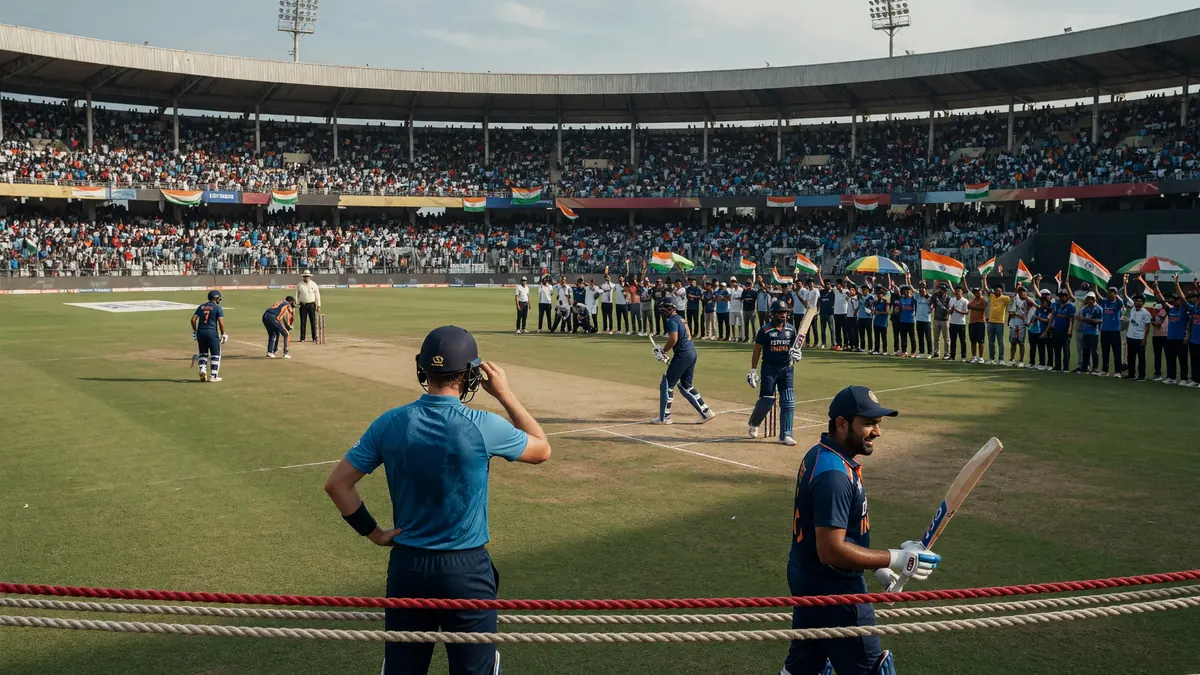
The ranking movement is mechanical rather than mysterious. Rating points move when players post meaningful scores against quality opposition, and England's middle order produced three high-value innings across a short series while India's senior batters split between a large Lord's hundred and quieter contributions elsewhere. The ICC media release that followed the series simply converted those numbers into places on a fixed table.
England took the three-match rubber 2-1. India won the opener, then lost the next two. The schedule ran across Edgbaston, Cardiff and Lord's between 14 and 19 July 2026, and the pattern of the results explains why English batters climbed faster than their Indian counterparts on the updated list.
England's second and third wins carried more batting weight for the rankings algorithm than India's solitary victory. Root finished undefeated in every innings of the series. Duckett's Lord's hundred was logged as the highest individual men's ODI score at the venue. Rohit's reply at Lord's was the largest Indian batting contribution of the rubber and the innings that trimmed his deficit on Kohli.
Root was named Player of the Series after unbeaten scores of 76, 99 and 74. Those three knocks lifted him four places to No. 8 on 674 rating points. It is his first appearance inside the ODI batting top 10 since 2020, a gap that underlines how rarely England have staged long ODI campaigns with Root in sustained form at No. 3 or No. 4.
Unbeaten innings matter in the ODI ranking formula because they lock in the full value of a completed contribution. Root never gave the opposition a dismissal across the series, so every run he scored converted cleanly into rating movement. The 99 not out at Cardiff was the clearest single-match lever: a chase-defining knock that finished one short of a hundred without the soft dismissal that often freezes a batter's points after a near-miss.
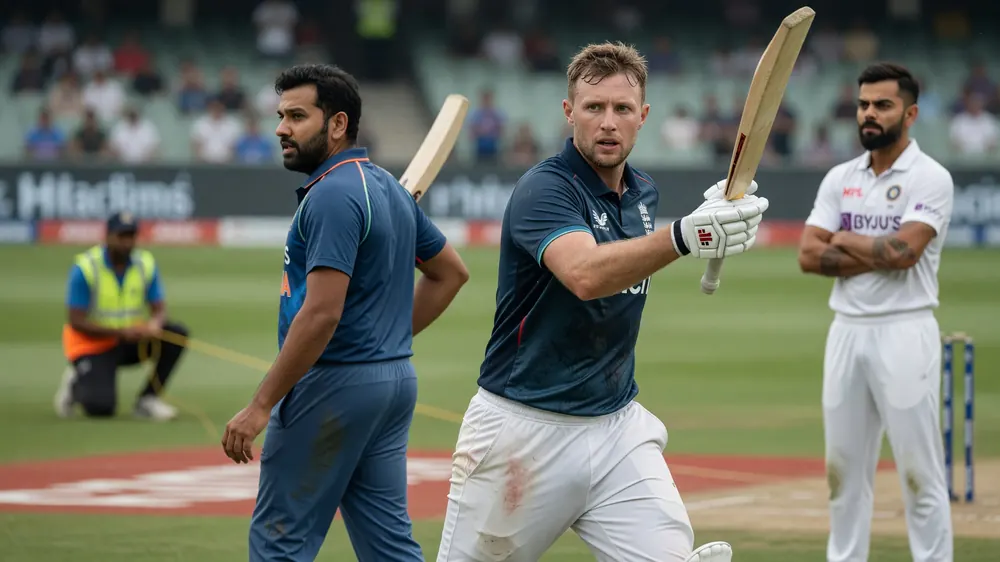
For readers who track white-ball form rather than Test averages, the takeaway is narrow but solid. Root's ODI game still produces long middle-overs occupancy when the surface asks for tempo control, and a short bilateral against India was enough to restore him among the ten highest-rated batters in the format. Whether that holds depends on England's next ODI blocks; a single series does not rebuild a five-year absence by itself, but the points are real and the place is earned.
Ben Duckett's 141 in the decider did more than decorate a high total. The ICC update moved him eleven places to joint-19th, the largest single jump among the England batters named in the release. The innings sat on a 192-run opening stand with Bethell (91), which gave England a platform that India never quite matched despite Rohit's counter-attack.
Duckett's rise is the classic ranking outcome of a venue landmark plus series context. A highest-ever men's ODI score at Lord's against India is weighted more heavily than a similar score against weaker opposition, and the algorithm rewarded both the volume of runs and the quality of the matchup. Bethell's 91 did not push him into the published top-10 snapshot, but it was part of the same opening platform that made England's 387 for 3 possible.
Sam Curran's four wickets at Lord's belong to the bowling table rather than this batting update, yet they shaped the chase India had to attempt. A target of 388 left little room for the usual middle-overs rebuild once early wickets fell, which is why Rohit's 138, substantial as it was, still ended on the losing side.
India's batting hierarchy at the top of the ODI list barely moved in absolute terms and still looks formidable. Shubman Gill stays No. 2 on 801 points, one behind world No. 1 Daryl Mitchell of New Zealand on 802. Virat Kohli holds No. 3 on 767. Rohit Sharma sits No. 4 on 758 after the Lord's hundred cut the Kohli gap to nine rating points.
That nine-point spread is the sharpest Indian storyline inside the update. Rohit did not overtake Kohli, and nothing in the release suggests a permanent reorder of India's senior order. He did, however, convert a losing cause at Lord's into enough rating movement to sit within a single strong series of the player immediately above him. For a ranking table that often freezes around established names, a single-digit gap between Nos. 3 and 4 is worth watching into the next bilateral window.
Gill's position is quieter and, in some ways, more impressive. He remains one point off the world No. 1 mark after contributing the unbeaten 80 that sealed India's only win of the series at Edgbaston. The table shows no fall and no dramatic leap — only a reminder that Gill's ODI rating has stabilised at a level where even a mixed series result does not drop him out of the top two.
Shreyas Iyer was the other named Indian mover. His 66 at Cardiff helped him climb two places to 13th. That sits just outside the published top 10, but it keeps him in the next tier of the table alongside other regular white-ball starters rather than sliding into a longer mid-list band.
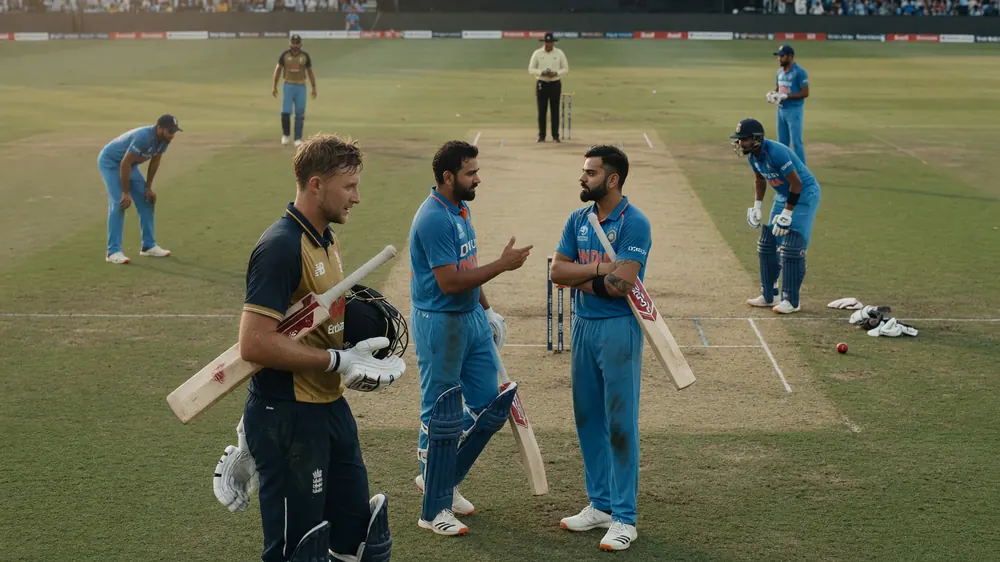
The full top ten on the post-series batting list, as published with the ICC release, now reads as follows:
| Pos | Batter | Team | Rating |
|---|---|---|---|
| 1 | Daryl Mitchell | New Zealand | 802 |
| 2 | Shubman Gill | India | 801 |
| 3 | Virat Kohli | India | 767 |
| 4 | Rohit Sharma | India | 758 |
| 5 | Ibrahim Zadran | Afghanistan | 712 |
| 6 | Babar Azam | Pakistan | 689 |
| 7 | Harry Tector | Ireland | 679 |
| 8 | Joe Root | England | 674 |
| 9 | Shai Hope | West Indies | 672 |
| 10 | Charith Asalanka | Sri Lanka | 659 |
Three Indian batters inside the top four is unusual depth even by India's standards. Mitchell's one-point cushion over Gill is the narrowest gap at No. 1 on this list. Root's re-entry at No. 8 slots him between Tector and Hope, eight points clear of Asalanka at No. 10 and five points behind Tector above him. The middle of the ten — Zadran, Babar, Tector — did not feature in the England-India series and therefore held position while the active players around them moved.
ODI rankings compress recent weighted performances into a single integer. They do not measure captaincy value, fielding, or bowling all-round contribution, and they do not forecast the next series. Root's return is evidence of a strong three-match sample, not a five-year trend reversal on its own. Rohit's nine-point chase of Kohli is evidence of one high-value hundred in a decider, not proof that India's opening and middle-order roles are about to flip.
The series result itself still matters more for team hierarchy than any individual rating row. England's first ODI series win over India since 2018 will frame both sides' next white-ball planning meetings more than a four-place jump or a nine-point gap. For form trackers, though, the table is a clean snapshot: Root is a top-ten ODI batter again, India's top four remain stacked, and Duckett's venue landmark has a visible ranking footprint.
Readers who want daily match notes, ranking follow-ups and squad reads from the same desk can find the wider set of cricket updates in Betrophy cricket news. The next bilateral window for both sides will decide whether Root's place hardens and whether Rohit can erase the remaining points on Kohli.
He finished unbeaten in all three innings (76, 99, 74), which maximises how completed contributions convert into rating points, and the opposition was India. Player of the Series volume against a top side is exactly the sample the ODI formula rewards.
No. Rohit is fourth on 758 and Kohli third on 767. The Lord's 138 reduced the gap to nine points; it did not reverse the order.
Daryl Mitchell of New Zealand on 802, one point ahead of Shubman Gill on 801.
It was cited as the highest individual men's ODI score at the ground. Combined with the 192-run opening stand and England's 387 for 3, it powered an eleven-place jump to joint-19th.
2018. The 2-1 result in July 2026 was England's first bilateral ODI series victory against India since then.
Track form, lock captains, and enter skill-based fantasy contests built around real match performance.
