India women beat England by 270 runs in the one-off Test at Lord's on Monday, 13 July 2026. The result was framed by the BCCI as a landmark moment for the women's game in India — a verdict that closes one chapter and opens another for the side captained by Harmanpreet Kaur. This note records what happened, what the Board said about it, and why the wider cricket conversation will keep returning to it for the rest of the year.
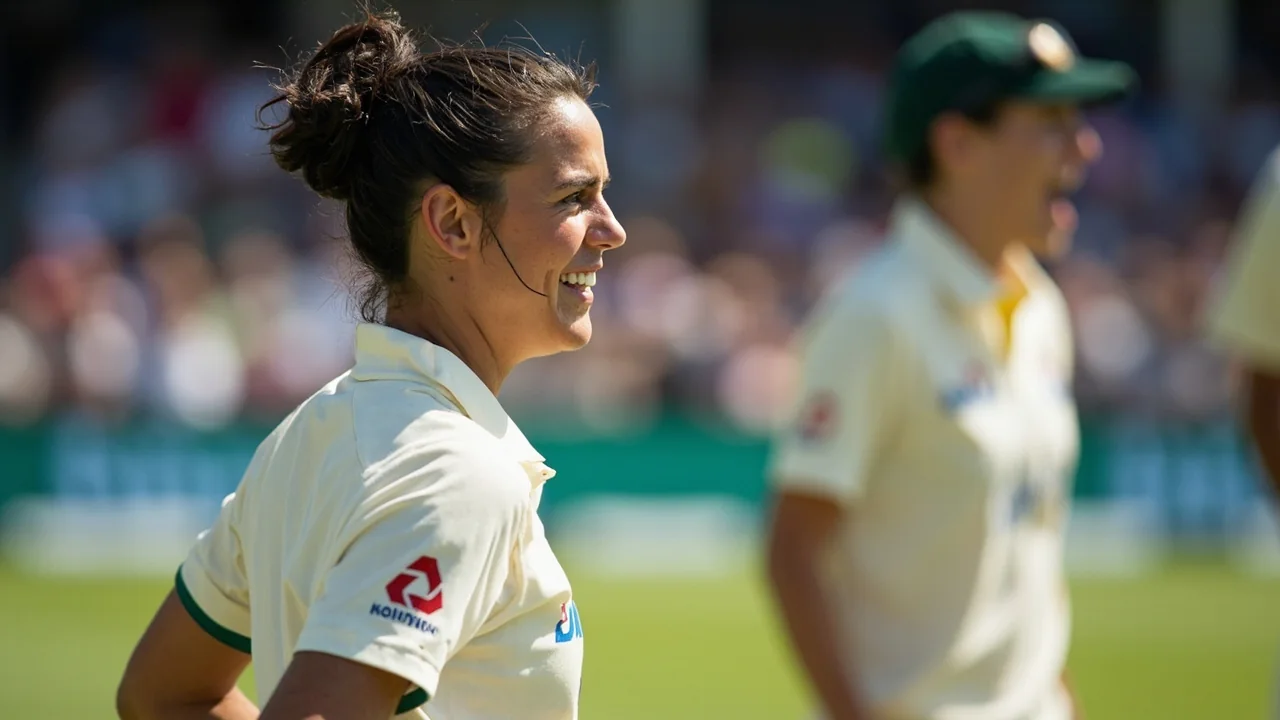
The result speaks first. A 270-run margin in a women's Test is not a close-run thing; it is the kind of gap that settles questions about who controlled the four days and who chased the game. The BCCI's Media Advisory dated 13 July 2026 — released on the bcci.tv news page the morning the match concluded — described the Indian Women's Cricket Team as having "scripted history" with a "landmark Test win" at the Home of Cricket. That phrasing, lifted directly from the advisory, frames the result as something more than a routine away-tour victory: it places the Lord's match on the timeline of Indian women's cricket, alongside earlier firsts that the Board has previously marked in the same register.
The advisory was a brief, formal communication signed off through the Board's communications channel rather than a long-form press note. Its headline language — history, landmark — carried the weight the result deserved, and the body of the note worked through three recognisable strands. First, congratulations to the players. Second, a credit line to the institutional work that produced a competitive women's side. Third, an acknowledgement of the people in the wider cricket administration whose earlier decisions made a side of this quality possible.
BCCI President Mithun Manhas publicly credited the team for the courage, discipline and belief shown across the contest. That is a deliberately specific trio of words: courage covers the choice of length and shot in long-form batting blocks, discipline covers the bowling spells that broke partnerships, and belief covers the dressing-room moments that hold a side together when the match drifts into a third-day grind. It is a careful way to thank a squad without elevating any single player above the group.
BCCI Honorary Secretary Devajit Saikia attributed the victory to sustained investment in women's cricket. He named three specific pieces of that investment: pay parity for centrally contracted women cricketers, enhanced match fees for domestic women cricketers, and the launch of the Women's Premier League. The choice of those three items is deliberate. Pay parity is a headline number that fixes the gap between men's and women's central contracts. Match fees are the unglamorous plumbing underneath it, the line items that decide whether a domestic career is viable across a full Indian season. The WPL is the visible competition that gives the women's game a televised calendar week of its own. Taken together, those three moves describe the architecture that produces a side capable of winning a Test at Lord's, not the single decision that did so.
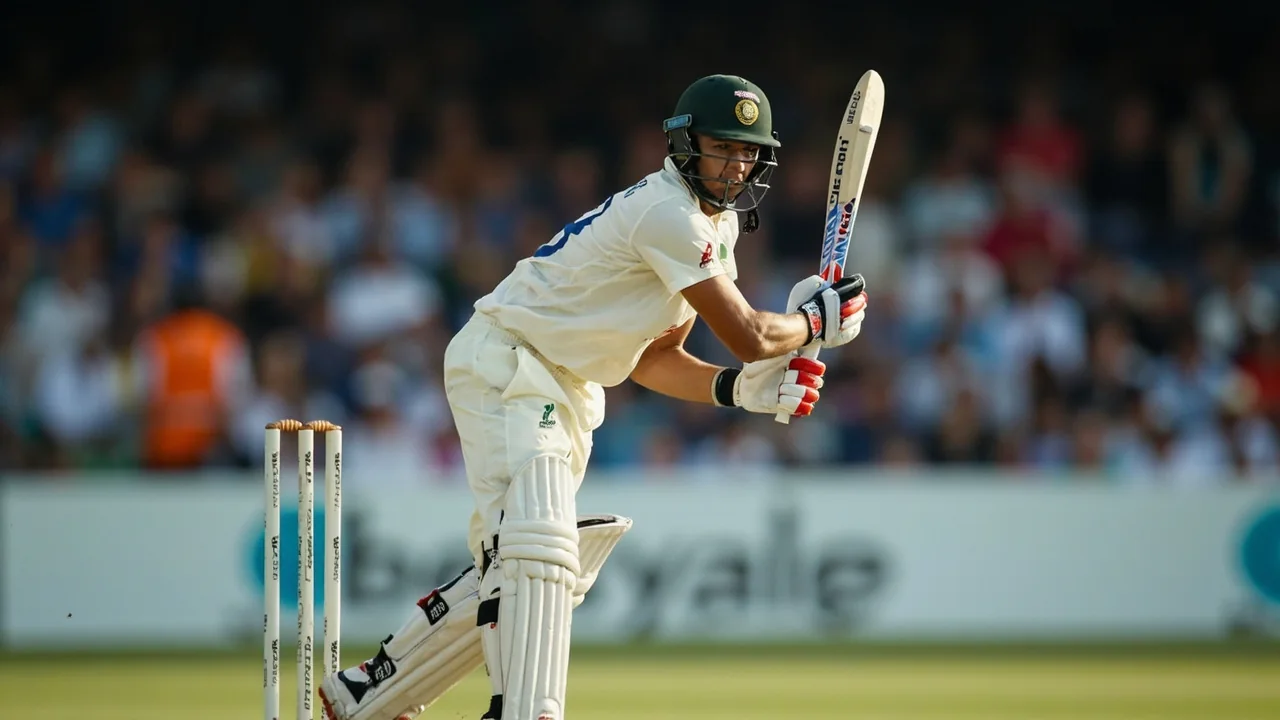
Both officials also acknowledged the role of Jay Shah, former Honorary Secretary of the BCCI and current Chairman of the International Cricket Council. That is a routine courtesy inside Indian cricket administration — outgoing office-holders are routinely credited when a structural change bears fruit — but the timing matters here. The investments Saikia named were largely built during the period Shah held the BCCI Secretary role, and the WPL in particular was an initiative that needed top-table backing to clear a crowded domestic calendar. The advisory's acknowledgement therefore closes a circle: the structural investments are publicly credited to the administration that authorised them, and the on-field result is publicly credited to the players who delivered it.
The advisory named captain Harmanpreet Kaur, the players, the coaches and the support staff as recipients of the Board's congratulations. That inclusive list matters in a women's set-up where the support team — physios, strength-and-conditioning coaches, analytics staff, the touring back-office — has expanded sharply over the last three years. A Test in England is a long, taxing trip; the advisory's inclusive language is the formal way of saying that the result was a squad outcome, not a starting-XI outcome.
For Harmanpreet Kaur personally, a Test win at Lord's adds a specific line to a captaincy record that already includes white-ball milestones. She has led India in T20 World Cups and at multi-format home series; she has now led India to a Test win at the most famous venue in the game. Future selectors, broadcasters and historians will record that line as the one that closes the gap between her resume and the resumes of the captains she is most often compared with.
Lord's matters because the venue has decided how cricket talks about itself for more than a century. A Test win there is the line that touring sides put on their honours boards, and a women's Test win there is rarer still — the format is played in England only when the schedule allows, and India's women have had fewer chances to play the longer format at the venue than their male counterparts have had. A 270-run margin makes the result unambiguous: this was not a fourth-day thriller that could have gone either way, it was a contest in which India held control from a point early enough to dictate terms.
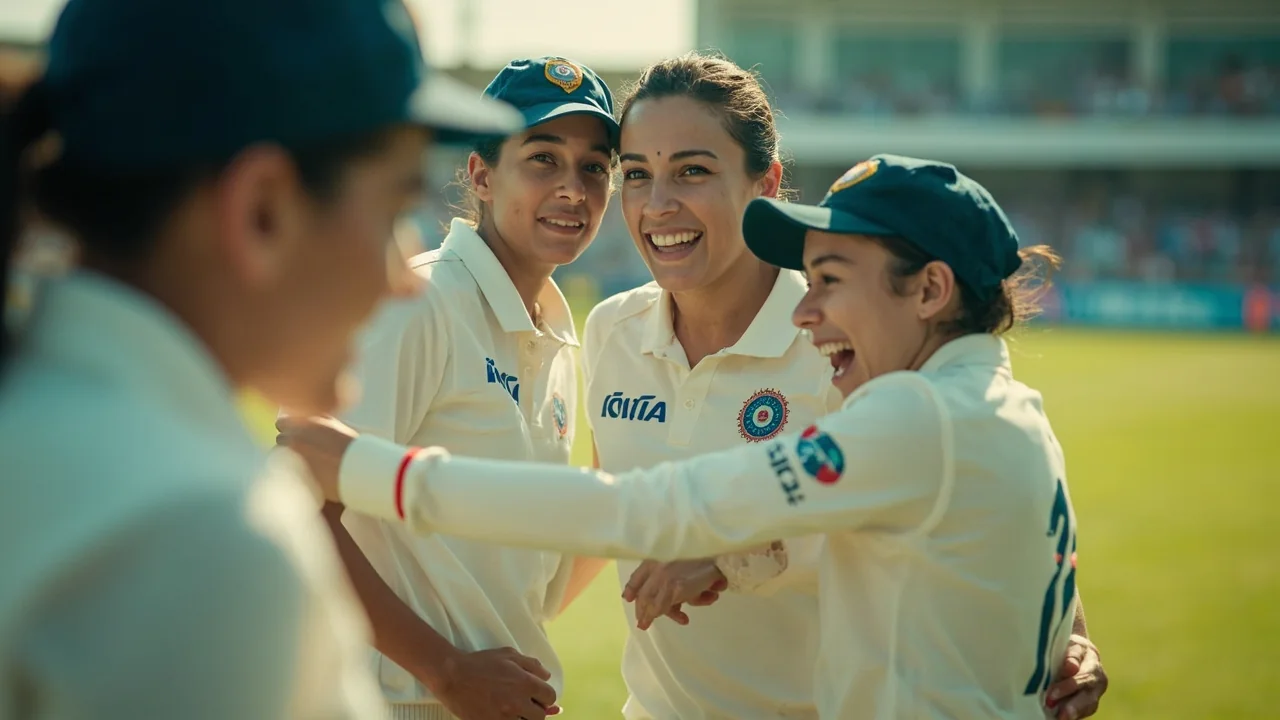
The advisory closed by framing the Lord's result as two things at once. First, an inspiration to young girls aspiring to represent India at the highest level — the language every Indian cricket release uses when it wants to mark a generational moment. Second, a defining result that reflects the growth of women's cricket in the country — the institutional language that connects a single match to the wider trajectory of the women's game.
Read together, those two framings are doing different jobs. The first is for the children who will pick up a bat this winter because they saw the scorecard. The second is for the administrators, sponsors and broadcasters who decide what the women's calendar looks like in 2027 and beyond. The advisory addresses both audiences in two short paragraphs, and that is what makes it a landmark document as much as the result it describes.
A Test win of this size resets expectations. India women will not be touring England again in this configuration for some time, and the next time they play a Test match — at home or away — the comparison will be made against this Lord's result. That comparison is fair: a side that wins by 270 runs at the Home of Cricket has earned the right to be judged on away-Test margins from now on.
The Board's named investments — pay parity, enhanced domestic match fees, the WPL — were not made specifically to win this Test. They were made to build a system. The advisory is the first formal acknowledgement that the system produced a side capable of doing what it did at Lord's, and the practical effect of that acknowledgement is that the same investments are unlikely to be reversed in the next budgeting cycle. For players who negotiate central contracts and domestic fees, that is a quietly important signal.
It is worth being clear about what a single Test win does and does not prove. It does not, by itself, settle the white-ball pecking order between India and England women. It does not, by itself, decide who wins the next multi-format series the two sides play. It does not, by itself, guarantee that the next time India women tour England the side will be in its current form — squads turn over, retirements happen, injuries intervene. What it does is shift the conversation. Before 13 July 2026, an India-England women's Test was a curiosity that some fans followed closely. After 13 July 2026, it is a contest that the wider cricket public expects India women to win.
On Monday, 13 July 2026. The BCCI Media Advisory was released at 9:00 am IST that morning, after the match concluded.
270 runs. The BCCI advisory described the result as India scripting history with a landmark Test win at the Home of Cricket.
Harmanpreet Kaur. She was named by the BCCI President as one of the recipients of the Board's congratulations, alongside the players, coaches and support staff.
Pay parity for centrally contracted women cricketers, enhanced match fees for domestic women cricketers, and the launch of the Women's Premier League.
On the BCCI's news page at bcci.tv, as a Media Advisory dated 13 July 2026.
Track squad moves, captain picks and contest decisions across women's cricket alongside the men's schedule.
