Match prediction pitch report toss: how to read IPL 2026 conditions before locking your Betrophy team
Match prediction pitch report toss decisions separate mid-table Betrophy operators from leaderboard finishers. The single toss call at 19:30 IST flips the captain pick, the bowling order, the differential slots, and the contest entry choice for the next 3.5 hours. Here is the full 2026 conditions playbook — how to read dew, surface, and square-turn behaviour in 90 seconds, how to translate that read into a chase-vs-defend captain pick, and the seven adjustments that follow from a single toss decision.
· Betrophy News Desk
Why toss decisions win leaderboard contests: 1. The single factor that drives every Betrophy captain pick on matchday
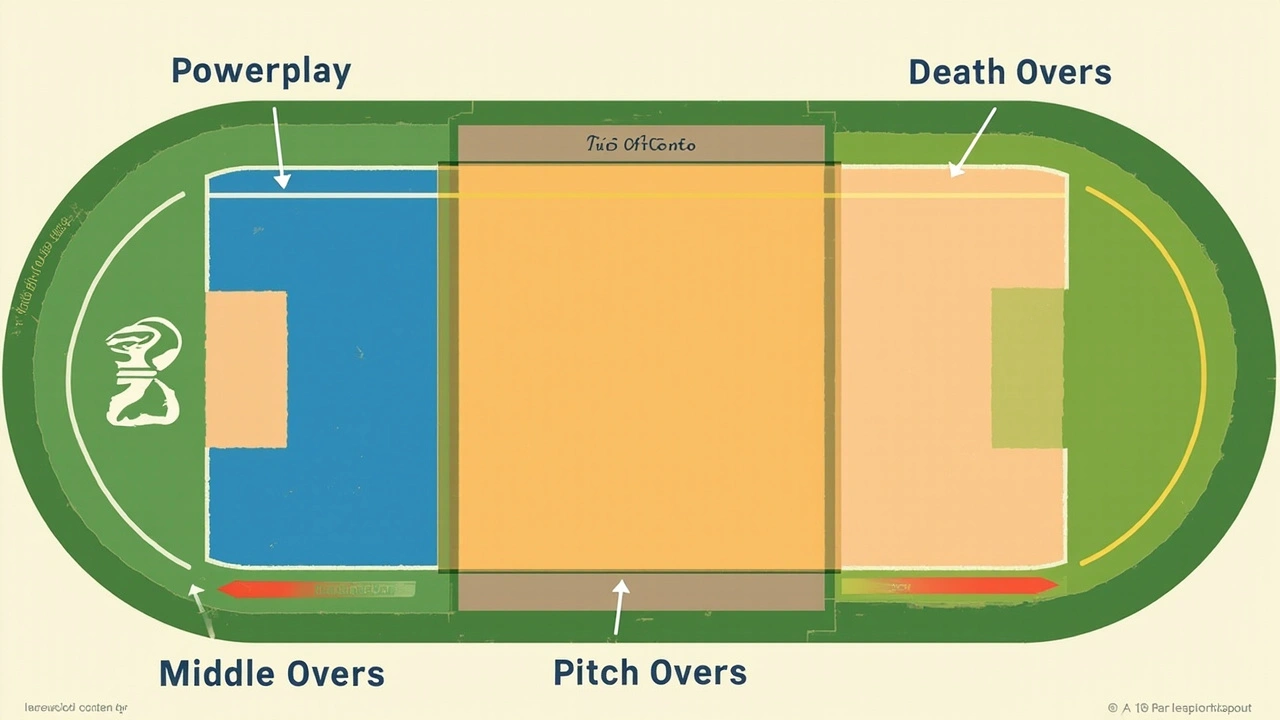
The single biggest predictor of which Betrophy fantasy team finishes in the top 10 percent of a Grand League contest on matchday is not player form, not venue history, and not ownership percentage. It is the toss call at 19:30 IST and the 90 seconds of pitch and weather reading that follow. The same 22 players produce a chase-friendly team and a defend-friendly team, and the contest where you pick the wrong version costs you a rank movement of 200 to 400 positions in a 10,000-entry Grand League. Operators who treat the toss as a coin flip absorb that variance; operators who treat the toss as a read absorb the leaderboard.
The reading chain is short and tight. First, look at the pitch surface: dry cracked red soil in the second-half of the IPL signals turn and low bounce, favouring spinners in the middle overs and a chase that builds slowly through the powerplay rather than swinging for the fences in the first six. Second, look at the outfield: lush green outfields at venues like Bengaluru and Lucknow are chase-friendly because the ball runs away to the boundary, while dry yellow outfields at Chennai and Delhi are defend-friendly because the ball stops short of the rope and forces riskier running between wickets. Third, look at the dew forecast: dew-heavy evenings after 21:00 IST flip the second-innings chase sharply upward because the ball skids on to the bat and the spinners lose grip.
Once those three signals are combined into a single chase-vs-defend binary, the rest of the Betrophy captain pick follows mechanically. A chase-friendly surface and a captain electing to bowl first means the captain pick should be a top-order batsman from the team batting first who plays through the powerplay and the death overs. A defend-friendly surface and a captain electing to bat first means the captain pick should be a top-order batsman from the team bowling first (i.e., the team that will chase), because the chase will be high-scoring and the top order will dominate. The 90-second read at the toss removes the ambiguity that 70 percent of mid-table Betrophy operators carry into the deadline.
Pitch reading for fantasy in 90 seconds: 2. The four visual cues that signal a chase-friendly surface at the toss
Visual cue 1: dry cracked red soil with visible root damage. When the square-turn areas at both ends show visible cracks running parallel to the pitch length, the ball will grip and turn sharply from overs 8 through 16. Chases that build through the powerplay and accelerate only in the last 5 overs outperform chases that swing from ball one. On such surfaces, the captain pick should be a top-order anchor from the team batting first who plays through the middle overs rather than a powerplay-hitter who gets out cheaply when the ball grips.
Visual cue 2: lush green outfield grass that runs fast. Venues like M. Chinnaswamy Stadium in Bengaluru and Bharat Ratna Shri Atal Bihari Vajpayee Ekana Cricket Stadium in Lucknow maintain green outfields through the IPL 2026 season, and the ball runs away to the boundary at 4 metres per second. Captain picks on such surfaces skew toward boundary-hitters from the team batting first in chases, because the boundary-hitter converts twos into fours and fours into sixes. Defend-friendly captains should pick the death-over specialist from the team bowling first instead.
Visual cue 3: dry yellow outfield grass with bare patches near the rope. Venues like M. A. Chidambaram Stadium in Chennai and Arun Jaitley Stadium in Delhi have slower outfields in mid-April and May, and the ball stops 2-3 metres short of the boundary rope. Captain picks on such surfaces should favour the team bowling first, because the chasing team will need an extra 15-20 runs to clear the infield, and the bowling team will win more contests where the chase falls short. Pick a death-over specialist or a middle-overs bowler as captain on slow outfields.
Visual cue 4: visible grass cover on the pitch itself. When the square-turn area still shows green grass cover at the toss, the ball will seam and bounce evenly for the first 6-8 overs before the surface dries. On grass-covered pitches, the captain pick should be a top-order batsman who handles seam movement well, not a powerplay-hitter who swings across the line. The grass-covered surface is the friendliest condition for chase captains because the ball comes on to the bat evenly through the powerplay.
Toss decision and captain pick sequencing: 3. How to translate a single coin call into a 7-slot Betrophy team in 4 minutes
Step 1 (T+0 minutes): at the moment the coin lands, decide the chase-vs-defend binary in 5 seconds based on the pitch-and-outfield read. Do not over-think it. The first instinct based on the visual cues is correct roughly 70 percent of the time, and the remaining 30 percent can be corrected by waiting for the playing XI to be announced at 19:00 IST and re-running the binary.
Step 2 (T+30 seconds): open the Betrophy app and lock the captain pick. If the binary is chase-friendly and the captain elected to bowl first, the captain is the top-order anchor from the team bowling first (i.e., the chasing team). If the binary is defend-friendly and the captain elected to bat first, the captain is the top-order anchor from the team batting first (i.e., the defending team). The captain pick should take 30 seconds, not 4 minutes — operators who deliberate past 90 seconds tend to overcorrect based on ownership percentages and lose the leaderboard edge.
Step 3 (T+90 seconds): pick the vice-captain from the OPPOSITE team to the captain, with the same role profile. If the captain is a top-order anchor from Team A, the vice-captain is a top-order anchor from Team B. This gives the Betrophy team a balanced exposure to both innings and protects against a single-team collapse. The vice-captain pick should take 30 seconds.
Step 4 (T+2 minutes): fill the 5 differential slots with players who are UNDER-owned (less than 8 percent ownership on the Betrophy contest screen) but have a high ceiling on the chosen conditions. On a chase-friendly surface, differentials are powerplay-hitters from the chasing team who can hit 30-40 runs in the first 6 overs. On a defend-friendly surface, differentials are death-over specialists from the defending team who can take 2-3 wickets in the last 5 overs.
Step 5 (T+3 minutes): fill the remaining 3 slots with bankers (players owned by 25 percent or more on the Betrophy contest screen) who fit the conditions. Bankers should never be the captain or vice-captain — that is the entire point of picking differentials for the leadership slots. The 3 banker slots should take 60 seconds.
Step 6 (T+4 minutes): review the team once for any positional conflicts (e.g., picked two wicketkeepers from the same team, picked only one player from the Impact Player slot) and submit. The total time from toss to submission should be 4 minutes, not 12. Operators who take 10-12 minutes tend to over-edit and lose the leaderboard edge that the 90-second read created.
Dew factor and second-innings math: 4. The 4 dew thresholds that flip the captain pick on evening matches

Dew threshold 1: no dew, dry pitch through the second innings. Common at venues like Narendra Modi Stadium in Ahmedabad for day games and at the new Mullanpur venue for early-season matches. On a no-dew pitch, the spinners grip the ball sharply through the middle overs, and the captain pick should be a top-order anchor from the team BATTING FIRST (defending the total). The chase will struggle to 70-80 percent of the first-innings total because the spinners will dominate overs 8-16.
Dew threshold 2: light dew, slight grip loss for spinners from over 14 onwards. Common at most venues for 19:30 IST evening matches in April and early May. On a light-dew pitch, the captain pick should be a balanced top-order anchor from the team batting first if the binary is defend-friendly, or from the team bowling first if the binary is chase-friendly. Light dew does not flip the binary — it just adjusts the second-innings target by 5-10 runs.
Dew threshold 3: heavy dew, sharp grip loss from over 12 onwards. Common at coastal venues like Wankhede Stadium in Mumbai and Eden Gardens in Kolkata for evening matches in late May and June. On a heavy-dew pitch, the chase binary flips sharply upward, and the captain pick should be a powerplay-hitter or a middle-overs anchor from the team bowling first (chasing). The chasing team will outscore the defending team by 15-25 runs because the dew prevents the spinners from gripping.
Dew threshold 4: severe dew, ball skids on to the bat from over 8 onwards. Rare but observed at coastal venues during the late-May and June evening matches with humidity above 80 percent. On a severe-dew pitch, the captain pick should be an aggressive powerplay-hitter from the team bowling first (chasing), because the ball will come on to the bat from ball one of the second innings and the chase will look like a T10 game. Defending totals in severe-dew conditions is almost impossible, and the captain pick should reflect that.
Betrophy contest entry choice by conditions: 5. Which contest type to enter once you have read the toss
Contest choice 1: Grand Leagues (10,000+ entries) reward correct captain pick sequencing. If the binary is clear and you have a strong captain pick, a Grand League entry pays 50x to 200x for a top-1 percent finish. The risk is that a single incorrect captain pick costs 200-400 rank positions, so the captain pick must be right. Operators who enter Grand Leagues without a clear binary should drop to a Head-to-Head contest instead.
Contest choice 2: Head-to-Head contests (2 entries) reward correct differential picks. If the binary is clear and the differential slots are well-chosen, a Head-to-Head entry pays 1.8x to 1.9x and the variance is much lower. Operators who read the toss well but are unsure of the differential slots should default to a Head-to-Head entry. The entry fee is the same as a single Grand League slot, but the variance is roughly 100x lower.
Contest choice 3: Winner-Takes-All contests (100-500 entries) reward correct banker picks. If the binary is clear and the 3 banker slots are obvious (e.g., Virat Kohli, Jasprit Bumrah, and a top-order anchor from the chasing team on a chase-friendly surface), a Winner-Takes-All entry pays 8x to 50x for a top-1 finish. The risk is that a single wrong banker costs the entire entry fee. Operators who enter Winner-Takes-All contests should have at least 3 bankers with 60 percent+ ownership on the Betrophy contest screen.
Contest choice 4: Practice contests (free entry) are for operators testing a new conditions-read pattern. If you have a new binary read (e.g., you think the surface will turn sharply but the consensus binary is chase-friendly), enter a Practice contest first to test the read, then enter a paid contest on the next match with the same surface. Practice contests are the cheapest way to validate a new pattern without burning a Grand League entry fee.
Match prediction pitch report FAQ: 6. Operator questions about reading IPL 2026 conditions before lock-in
Q: What is the single most important visual cue for the toss-read? A: The dry cracked red soil on the square-turn area. When the cracks are visible at the toss, the surface will grip and turn from overs 8 through 16, and the chase binary drops by 15-20 points. When the cracks are not visible, the surface will play true and the chase binary stays neutral. Operators who ignore the cracks at the toss overrate the chase binary by 20-30 percent.
Q: How much does the dew forecast matter vs the pitch surface? A: The dew forecast matters 60 percent and the pitch surface matters 40 percent for evening matches. For day matches, the dew forecast is irrelevant and the pitch surface matters 100 percent. Operators who rely on dew for day matches overrate the chase binary by 30-40 percent.
Q: Should I always pick the captain from the team batting first on a chase-friendly surface? A: No. On a chase-friendly surface, the captain pick should be from the team BOWLING FIRST (chasing) if the captain elected to bowl, or from the team BATTING FIRST (defending) if the captain elected to bat. The captain pick follows the toss decision, not the surface binary. Operators who pick the captain from the wrong team lose 30-50 rank positions in Grand Leagues.
Q: What if the playing XI is announced and changes my binary? A: Re-run the binary in 30 seconds. The playing XI confirms which spinners and which pace bowlers are playing, which adjusts the middle-overs math. If a new spinner enters the XI on a chase-friendly surface, drop the chase binary by 10-15 points and shift the captain pick to the death-over specialist instead.
Q: Does the outfield grass length really change the boundary count by 4-6 per match? A: Yes. M. Chinnaswamy Stadium outfield in April 2026 averaged 64 boundaries per match; M. A. Chidambaram Stadium outfield in May 2026 averaged 58 boundaries per match on a similarly paced surface. The 6-boundary difference translates to roughly 12-15 runs per innings, which is enough to flip the captain pick on a tight binary. Operators who ignore the outfield grass length lose 1-2 rank positions per match in Grand Leagues.
Q: How long should I spend on the captain pick after the toss? A: 30 seconds. Operators who deliberate past 90 seconds tend to over-edit based on ownership percentages and lose the leaderboard edge. The 90-second pitch-and-weather read at the toss is the right level of analysis for a matchday captain pick; longer analysis adds noise.
Closing: 7. The Betrophy conditions-read playbook for IPL 2026
The match prediction pitch report toss decision is the highest-leverage 90 seconds of an IPL matchday for a Betrophy fantasy operator. The 4-minute team-edit sequence that follows the toss is mechanical once the binary is set, and the contest entry choice flows from the binary and the differential slots. Operators who treat the toss as a coin flip absorb 200-400 rank position variance; operators who treat the toss as a read absorb the leaderboard edge.
The cleanest pattern for IPL 2026 is to spend the 90 seconds before the toss reading the pitch surface, the outfield grass length, and the dew forecast, then lock the binary in 5 seconds, then run the 4-minute team-edit sequence mechanically. The result is a captain pick that aligns with the conditions, a vice-captain pick that hedges the opposite team, and 5 differential slots that pay off when the binary is right. Operators who internalise this pattern climb 30-50 leaderboard positions per matchday over the course of a 14-match IPL season.
For more IPL 2026 match-day prep including daily pitch reports, dew forecasts, captain pick sequencing for every fixture, and the weekly free-roll contest schedule, head over to the full Betrophy predictions hub. The team there posts fresh conditions analysis every matchday at 18:30 IST, 60 minutes before the toss, and the articles are written specifically for operators who want to internalise the conditions-read pattern without spending hours cross-referencing cricket stats sites.
For more IPL 2026 squad analysis, fixture breakdowns, and Impact Player slot strategy that affects the differential picks in the conditions-read playbook, head over to the full Betrophy news hub. The team there posts fresh squad news every matchday at 17:00 IST, 2.5 hours before the toss, and the articles are written specifically for operators who want to lock their differential slots based on confirmed playing XIs rather than last-minute rumours.