Completed-season review · Mumbai Indians · IPL 2026
Mumbai Indians IPL 2026 Role Audit: How a ₹63.2 Crore Core Finished Ninth
Mumbai Indians entered IPL 2026 with one of the competition’s most expensive star groups. They ended the league stage ninth. This Betrophy audit separates reputation from delivered role value, traces the injuries and pressure failures behind the result, and turns a completed season into a more disciplined player-evaluation framework.
Table of contents
1. The final verdict: MI finished ninth, and the table removed the reputation premium
Mumbai Indians finished the IPL 2026 league stage in ninth place after four wins and ten defeats from 14 matches. Their eight points placed them level with bottom side Lucknow Super Giants, while their superior net run rate kept them one position higher. That result mattered because the squad had not been assembled as a developmental group. It contained established India internationals, proven overseas specialists, a five-title franchise core and one of the league’s largest concentrations of salary at the top.
The elimination became official on May 10. MI made 166 for seven against Royal Challengers Bengaluru in New Raipur, but RCB reached 168 with one ball remaining and won by two wickets. The final over became a compact image of the wider season: experienced bowling resources had already been exhausted, Raj Angad Bawa was left with 15 to defend in his first bowling assignment of that match, and the sequence included a wide, a no-ball, a wicket, another wide and a decisive six from Bhuvneshwar Kumar. It was not the only reason MI missed the playoffs, but it showed how a thin role plan could surface under pressure.
Ninth represented the franchise’s third-worst finish across 19 seasons, behind the tenth-place campaigns of 2022 and 2024. MI still produced bright moments. They broke a long opening-match jinx by chasing 222 against Kolkata Knight Riders in 19.1 overs for a six-wicket win. Yet isolated peaks did not outweigh ten losses. A completed-season audit therefore had to begin with the table rather than the badge: the 2026 team produced bottom-two results despite top-tier expectations.
2. The ₹63.2 crore core: elite prices, concentrated risk and insufficient collective return

Jasprit Bumrah’s listed ₹18 crore salary, Hardik Pandya’s ₹16.35 crore, Suryakumar Yadav’s ₹16.35 crore and Trent Boult’s ₹12.5 crore combined to ₹63.2 crore. That number did not describe the entire wage bill, and salary alone never guaranteed output. It did describe concentration. When four contracts absorbed such a large share of resources, the team depended on those roles remaining available, complementary and productive at the same time.
In 2026, that four-player portfolio did not compound. Hardik missed matches with back spasms and returned 146 runs plus four wickets across eight innings, with his bowling economy reported around 12. Suryakumar averaged 17.73 across 11 innings, his weakest seasonal average since 2017, and was dismissed first ball in the elimination game. Bumrah took only three wickets in 11 innings at an economy of 8.51 and went wicketless in his first five matches. Boult’s return added new-ball pedigree, but the broader attack did not create enough reliable phase coverage around him.
The lesson was not that premium players were inherently poor purchases. The lesson was that a premium group required protection against correlated failure. MI carried experienced fast bowlers, but injuries and role exhaustion still left an inexperienced option to defend the season in a final over. They carried celebrated top-order batters, but absences and low returns still destabilised the batting sequence. Concentration worked when elite players amplified one another; in 2026, availability and form made the concentration a risk multiplier.
3. Batting role audit: continuity broke before reputation could rescue the order
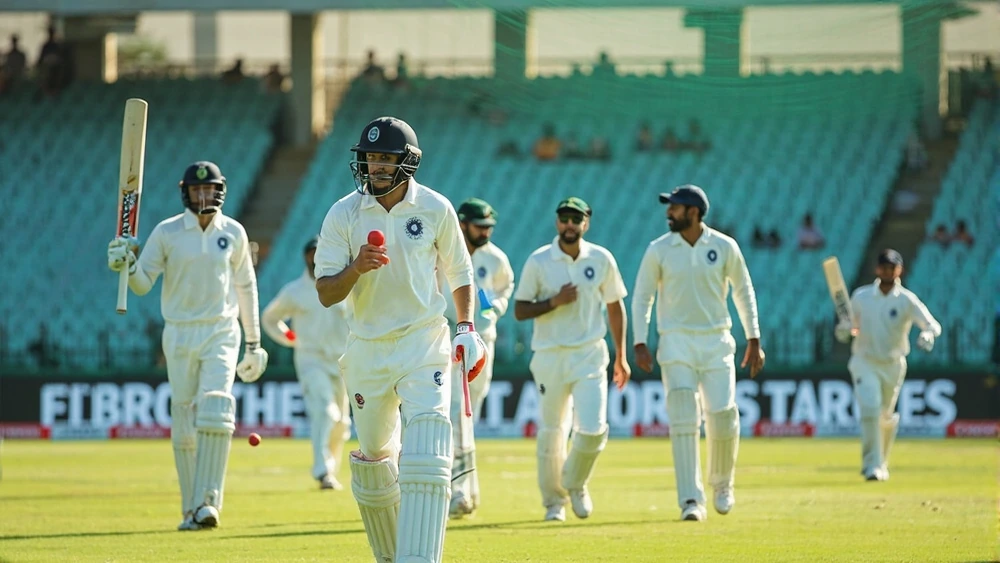
Rohit Sharma remained the franchise’s all-time leading scorer, with 5,698 runs in 221 innings in the referenced historical table. His 2026 hamstring injury, however, kept him out for six consecutive matches. Losing an opener for that long did more than remove one name. It changed the powerplay pairing, moved responsibility toward the remaining senior batters and reduced the continuity available to wicketkeepers Ryan Rickelton and Quinton de Kock, Tilak Varma and the younger depth options.
Suryakumar’s downturn was especially expensive because his normal role connected the powerplay to the final ten overs. His 17.73 average across 11 innings meant MI repeatedly entered the middle phase without the acceleration and matchup control usually associated with him. Tilak remained an important left-handed stabiliser, but one player could not simultaneously repair an opening disruption, carry the middle overs and supply finishing pace. The roster contained batting talent; the season did not produce a stable sequence of responsibilities.
The wicketkeeping group also showed why headcount could mislead. Quinton de Kock returned for a listed ₹1 crore, Ryan Rickelton remained available as another overseas keeper, and Robin Minz supplied an Indian option. Three wicketkeepers created flexibility, but overseas slots, opening combinations and form determined whether that flexibility became value. A role audit therefore asked not “how many recognised batters were present?” but “how many batting positions had a repeatable first choice, a compatible backup and a clear replacement plan?” MI’s answer changed too often.
4. Bowling role audit: famous names did not create complete phase coverage
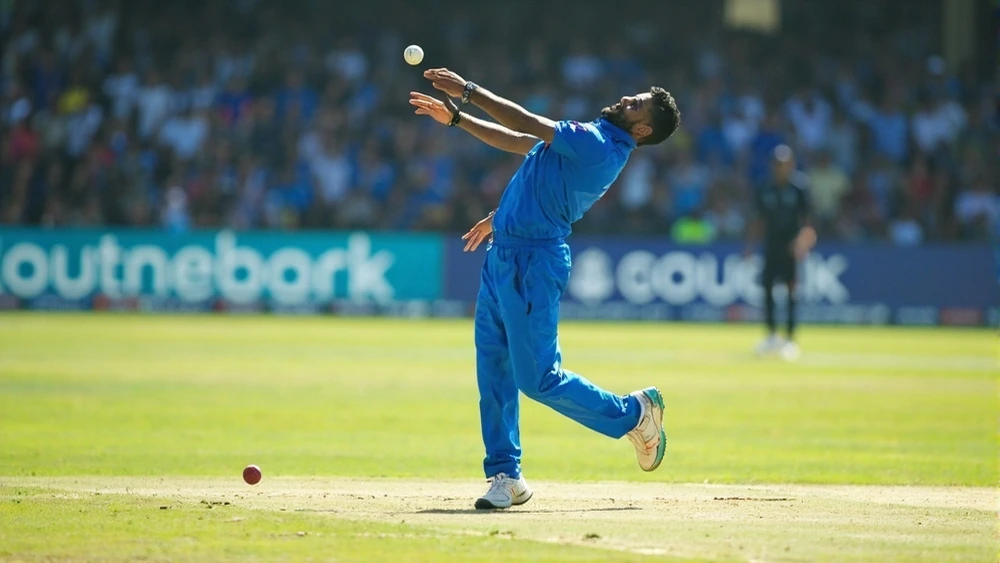
On paper, Bumrah, Boult and Deepak Chahar offered new-ball movement, control and death-over pedigree. Shardul Thakur added wicket-taking volatility, while Mitchell Santner, Allah Mohammad Ghazanfar, Mayank Markande and Raghu Sharma gave MI several spin shapes. The list looked varied. The match-phase map proved less secure.
Bumrah’s three wickets in 11 innings removed much of the normal safety net. When the leading death bowler did not generate his usual dismissals, the rest of the unit had to cover more high-leverage overs. Deepak’s listed ₹9.25 crore contract and Boult’s ₹12.5 crore contract raised the expectation of powerplay impact, while the middle overs needed either spin control or an all-rounder to bridge into the finish. Injuries to Hardik and Santner made that bridge less predictable.
The RCB finish exposed the allocation problem in the clearest way. Coach Mahela Jayawardene said the experienced bowlers had been used up before the final over. A bowling card can contain elite names and still fail structurally if the captain must spend every trusted over early to stay in the contest. The strongest future evaluation question is therefore phase redundancy: if the first-choice death option is unavailable or has completed his spell, who owns overs 18 and 20? In the elimination match, MI’s answer was not robust enough.
5. Injuries and forced changes: availability became a tactical variable, not a footnote
MI’s injury list included Rohit’s hamstring problem, Hardik’s back spasms and Mitchell Santner’s shoulder issue. Jayawardene described “a lot of injuries” and “forced changes” in the post-season reporting. That context did not erase a 4–10 record, but it changed how the roster should be judged. A player’s nominal role only helped when he was available to perform it; repeated forced changes reduced partnership continuity and shortened the planning horizon from a season to the next match.
Hardik’s absence also affected leadership. Suryakumar stood in as captain in five matches during the period recorded in the captaincy table. Stand-in leadership was not automatically a weakness, but the handover arrived alongside a batting slump and shifting combinations. One player was asked to absorb captaincy decisions while also repairing personal output and a disrupted order. That combination increased cognitive and tactical load.
Depth should be evaluated by substitution quality, not by the number of reserves. Danish Malewar, Mohammed Salahuddin Izhar, Ashwani Kumar, Robin Minz, Raghu Sharma and Mayank Markande represented low-cost depth options. Some had narrow specialist paths; others required a vacancy or matchup to enter. When several senior roles became unstable at once, those depth pieces had to cover responsibilities for which the roster had not necessarily prepared them. MI’s 2026 season showed that backup labels mattered less than backup role equivalence.
6. Leadership and execution: the season was lost in repeated margins, not one decision
Hardik captained the side, while Mahela Jayawardene returned as coach and worked with a support group that included Kieron Pollard, Lasith Malinga, Paras Mhambrey and Sachin Tendulkar. Few franchises could match that level of institutional knowledge. Yet coaching pedigree did not eliminate the need for stable combinations and repeatable execution. Jayawardene’s post-season assessment was direct: MI had opportunities, but were not consistent enough with bat or ball.
The leadership debate often became personalised because Hardik had replaced Rohit in 2024. A useful audit resisted that shortcut. The 2026 failure involved injuries, senior form, bowling allocation, batting continuity and pressure execution. Captaincy influenced each area, but it did not fully control any of them. Blaming only the captain would hide the roster-design questions; blaming only injuries would hide the execution failures.
The best evidence came from close moments. Against RCB, the attack reached the final over without an experienced specialist available. Against other opponents, low senior output forced too much recovery work onto the remaining lineup. MI also suffered two heavy defeats to Chennai Super Kings in 2026—a 103-run loss at Wankhede and an eight-wicket loss at Chepauk. Those results suggested that the problem crossed venues and match states. Leadership was part of the audit, but the evidence pointed to a system failure rather than one isolated call.
7. Acquisition scorecard: useful pieces arrived, but fit mattered more than the shopping list
The 2026 additions included Shardul Thakur, Quinton de Kock, Sherfane Rutherford, Mayank Markande, Danish Malewar and Mohammed Salahuddin Izhar, while Trent Boult’s return strengthened the pace group. On paper, the window addressed experience, wicketkeeping, all-round depth, spin cover and fast-bowling familiarity. The result demonstrated that acquisition breadth was not the same as lineup fit.
| Acquisition | Listed salary | Intended value | Audit view |
|---|---|---|---|
| Trent Boult | ₹12.5 cr | Powerplay wickets and left-arm variation | Core role Clear phase fit, but the attack around him still lacked complete redundancy. |
| Sherfane Rutherford | ₹2.6 cr | Overseas middle-order power and part-time flexibility | Fit dependent Overseas balance and batting position determined his opportunity. |
| Shardul Thakur | ₹2 cr | Indian seam depth and wicket-taking aggression | Volatile role Useful when wickets mattered more than economy control. |
| Quinton de Kock | ₹1 cr | Experienced wicketkeeper-opener | Combination choice Value depended on overseas slots and opening continuity. |
| Mayank Markande | ₹30 lakh | Indian leg-spin cover | Depth Matchup value required a stable route into the XI. |
| Danish Malewar / M. Salahuddin Izhar | ₹30 lakh each | Low-cost domestic depth | Development They could not reasonably be expected to repair several senior-role failures at once. |
A successful auction scorecard should separate price from pathway. Boult had a direct pathway because every XI required a new-ball bowler. A second wicketkeeper or overseas middle-order batter faced more constraints. Low-cost domestic players offered budget efficiency, but only when the coaching plan defined when and why they would play. MI added options; the season did not consistently turn those options into a coherent role ladder.
8. Player-by-player roster map: what each slot was supposed to solve
The table below uses the squad list and reported salaries available in the post-season source pack. It is a role map, not a claim that every player appeared in every match. The squad table itself did not capture every player used during the season, so this review avoided calling it an exhaustive match-by-match appearance list.
| Role group | Players | Listed salary anchors | 2026 role question |
|---|---|---|---|
| Top-order batting | Rohit Sharma, Suryakumar Yadav, Tilak Varma, Danish Malewar | ₹16.3 cr; ₹16.35 cr; ₹8 cr; ₹30 lakh | Could MI preserve opening and middle-over continuity through injuries and low senior output? |
| Wicketkeepers | Quinton de Kock, Ryan Rickelton, Robin Minz | ₹1 cr; ₹1 cr; ₹65 lakh | Which keeper best matched the opening plan and overseas-slot balance? |
| All-rounders | Hardik Pandya, Will Jacks, Mitchell Santner, Sherfane Rutherford, Corbin Bosch, Shardul Thakur | ₹16.35 cr to ₹75 lakh | Which players had both a stable batting position and a repeatable bowling allocation? |
| Fast bowling | Jasprit Bumrah, Trent Boult, Deepak Chahar, Ashwani Kumar, M. Salahuddin Izhar | ₹18 cr; ₹12.5 cr; ₹9.25 cr; ₹30 lakh; ₹30 lakh | Who covered the final overs when the first-choice specialists were unavailable or used early? |
| Spin | Allah Mohammad Ghazanfar, Mayank Markande, Raghu Sharma | ₹4.8 cr; ₹30 lakh; ₹30 lakh | Did the XI contain a stable middle-over wicket-taking plan across venue types? |
The expensive rows carried expectation; the inexpensive rows carried optionality. The gap appeared when optionality had to become core production too quickly. For Betrophy readers reviewing past performance, this distinction is critical. A reserve who entered because of injury did not inherit the same expected output as a ₹15 crore senior. Evaluation should compare a player with the responsibility he actually received, not only with the reputation of the name he replaced.
9. Fantasy retrospective: five selection lessons from the completed season

- Availability came before reputation. Rohit’s six-match absence and Hardik’s missed matches changed the opportunity tree. A famous player who was unavailable returned no lineup value, while a replacement’s value depended on the role he actually inherited.
- Batting position mattered more than the squad label. Three wicketkeepers did not create three equal fantasy options. Opening responsibility, overseas combinations and the confirmed XI determined opportunity.
- Bowling allocation mattered more than career wickets. Bumrah’s historical record remained elite, but his 2026 season produced only three wickets in 11 innings. The correct retrospective signal was delivered overs and current phase impact, not the career badge alone.
- Two-way roles required proof. An all-rounder was valuable only when both skills were active. A player listed as an all-rounder but receiving few balls and no reliable spell had less opportunity than the label implied.
- Price concentration created correlated risk. When several premium selections from one team struggled together, stacking them amplified downside. Balanced exposure across roles and teams reduced dependence on one franchise narrative.
These were review principles, not instructions to reuse IPL 2026 numbers in a future contest. Player contracts, squads, roles, fitness and form could change. The Betrophy players hub should be used alongside the current confirmed XI and the fantasy tips hub before any new lineup decision.
10. What to verify before IPL 2027—without inventing auction moves
This review made no claim that Mumbai Indians would release, retain or buy a named player. No verified July 2026 source supported a specific future move. A responsible forward-looking section therefore focused on questions that could be answered later, once official information existed.
- Fitness: verify whether the first-choice opener, captain and spin all-rounder were fully available.
- Leadership: verify the officially announced captain rather than assuming that a 2026 arrangement continued.
- Opening pair: identify which wicketkeeper, if any, opened and how that choice affected overseas slots.
- Middle-overs batting: confirm the positions assigned to Suryakumar, Tilak and any new addition.
- Bowling phases: map overs 1–6, 7–15 and 16–20, including a second death option.
- All-rounder usage: require evidence of both batting and bowling opportunity before treating a player as a two-way pick.
- Current evidence: replace completed-season averages with recent, competition-relevant form when 2027 began.
The ninth-place finish did not prove that every premium player had become poor or that every low-cost player deserved promotion. It proved that MI’s 2026 mix failed as a system. The clean response was not a dramatic prediction; it was a better verification process.
Frequently asked questions about Mumbai Indians’ IPL 2026 role audit
Where did Mumbai Indians finish in IPL 2026?
Mumbai Indians finished ninth in the completed IPL 2026 league table with four wins, ten losses, eight points and a net run rate of −0.584. They were eliminated on May 10 after a last-over defeat to Royal Challengers Bengaluru.
Why does this Betrophy article call ₹63.2 crore the core figure?
The ₹63.2 crore figure is the combined listed salary of Jasprit Bumrah (₹18 crore), Hardik Pandya (₹16.35 crore), Suryakumar Yadav (₹16.35 crore) and Trent Boult (₹12.5 crore). It is a concentration measure, not the complete squad bill.
Was one player responsible for MI’s ninth-place finish?
No. The evidence pointed to a portfolio failure: injuries forced changes, senior output fell, bowling roles became fragile, the batting unit lost continuity and pressure execution failed at decisive moments. A responsible review should not reduce that pattern to one scapegoat.
How should fantasy readers use a completed-season audit?
Use it to identify role stability, availability risk and price-versus-opportunity mismatches. Do not copy old points into a future lineup. Before any 2027 contest, verify the current squad, confirmed XI, batting order, bowling allocation, venue and toss.
Did Betrophy predict Mumbai Indians’ 2027 auction moves?
No. This article deliberately avoided unsourced auction or release predictions. It provided a verification checklist for future selection decisions rather than claiming that MI would buy, retain or release any player.
Which sources supported this review?
The review used the IPL results page, the Mumbai Indians squad and historical records pages, the final league table reported by Olympics.com, a Reuters elimination report, and a Sporting News/Yahoo post-season analysis. Source links appear below the FAQ.
Sources and editorial references
- IPL T20 official match results — completed-season results and scorecards.
- Mumbai Indians — squad, salaries, captaincy and historical records.
- 2026 Indian Premier League — tournament context.
- Olympics.com final qualification table — final league positions, points and net run rate.
- Reuters, May 10, 2026 — MI elimination against RCB.
- Sporting News via Yahoo Sports — post-season reasons, injuries and individual output.